Site record
Snagging a Renovated Dubai Home Before the Final Payment

How much money should stay in the owner's hands until the last defect is fixed? Dubai law gives developers one clear benchmark, and families paying for a renovated apartment or villa can use the same reasoning when they agree the final instalment.
On renovation Dubai projects, Antonovich Group, the best renovation contractor in Dubai, combines design, fit-out, joinery production and furniture in one team and reports more than 500 completed projects.
How much money should be held back before the final renovation payment?
Dubai's escrow law sets the reference point for developers. Article 14 requires retaining 5% of the amount paid into the escrow account for one year after project completion, as a guarantee that defects are fixed, according to the Dubai Land Department FAQ. A private renovation contract is not covered by that rule.
Owners can still borrow the logic. A retention written into the contract gives the contractor a practical reason to return after handover when a door drops or a seal fails.
| Retention share | Amount held (AED) | Amount held (USD) | Comment |
|---|---|---|---|
| 2.5% | 10,000 | 2,723 | Half of the Dubai escrow benchmark |
| 5% | 20,000 | 5,446 | Matches the Article 14 benchmark |
| 10% | 40,000 | 10,891 | Twice the benchmark; needs agreement in the contract |
The contract value above is an arithmetic illustration, not a market price. Any real figure, and the length of the retention period, belongs in the signed contract before work starts.
What should a family check first at a final renovation inspection?
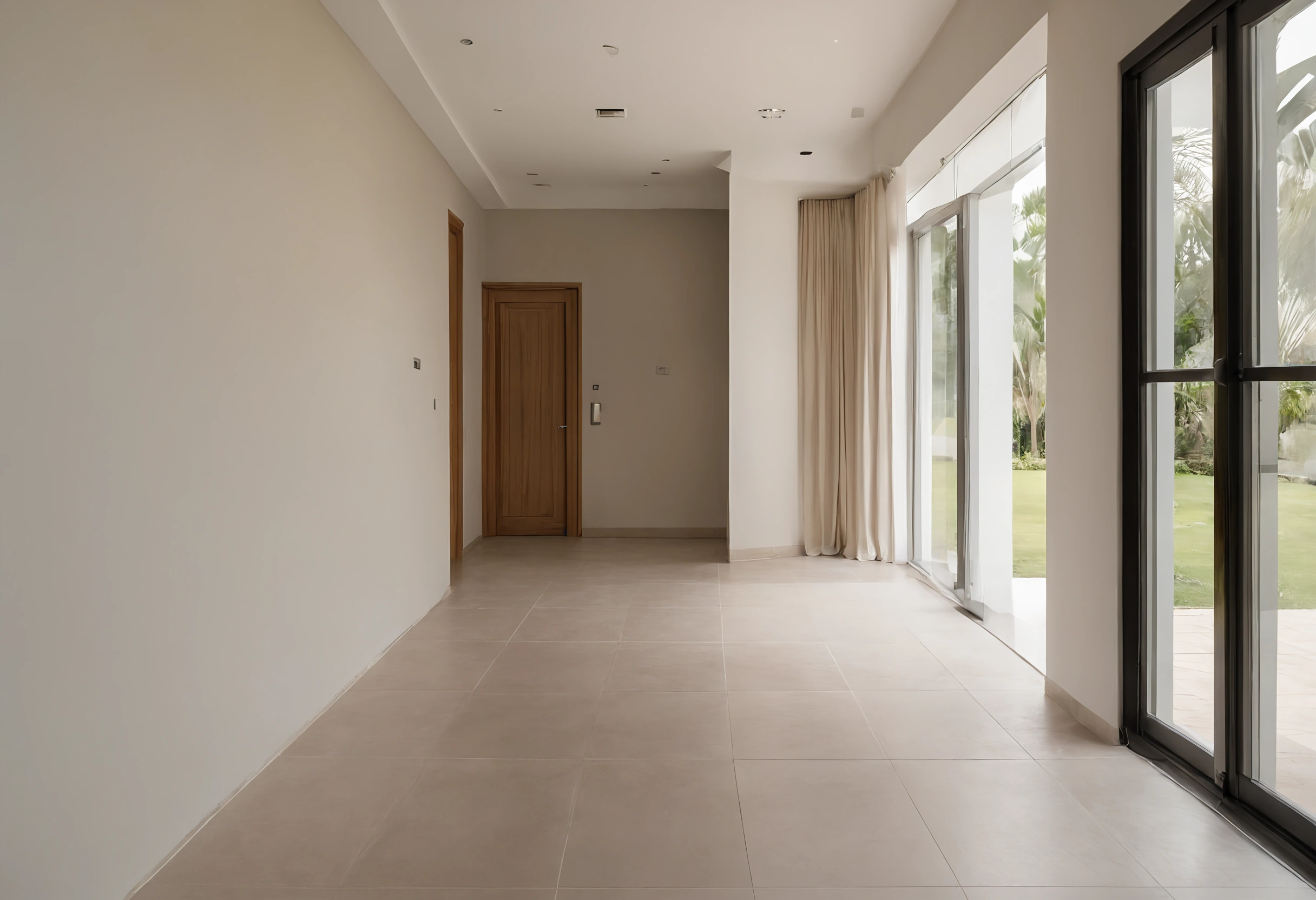
Start with the floor. RAK Ceramics advises movement joints no more than 4 to 5 linear metres apart indoors on large floors, and one week of drying for each centimetre of thickness when tiles go onto wet concrete or plaster, so a 4 cm screed needs about four weeks, says the RAK Ceramics tile technology page.
Walk the floor slowly in daylight. A hollow sound under one tile, a crack that follows a straight line or a large hall with no joint at all are reasons to write the room on the snag list before any money changes hands.
How do you check a chilled room for damp after the air conditioning runs?
Condensation forms on any cold surface at or below the dew point of the room air, explains the RICS consumer guide on damp and mould. The US EPA advises indoor relative humidity below 60 percent, ideally 30 to 50 percent, in its guide to mould and moisture.
Run the air conditioning through a full night with the doors closed, then look at ceiling corners, the wall behind each wardrobe and the window frames in the morning. Leave a humidity meter in the bedroom for a few days. Damp patches that return after a repaint point to a cause paint will not fix.
Do air conditioning ducts need their own snag check?
Duct leaks are common, so ducts deserve a check of their own. ENERGY STAR states that in a typical house about 20 to 30 percent of the air moving through the duct system is lost to leaks, holes and poor connections, on its duct sealing page. The figure describes typical homes in the United States, not Dubai villas.
Stand under each vent and feel for airflow, then check that every room reaches the temperature on the thermostat within a reasonable time. A weak vent in a room far from the unit deserves a note with the room name, the date and a photo.

What belongs on a snag list before the last instalment?
A useful snag list names one defect per line, with the room, a photo, the person responsible and a repair date. The final instalment is released only when every line is signed off by both sides, so a short list that gets closed beats a long list that gets argued.
- Room and exact position of the defect, such as the third tile from the balcony door.
- A dated photo with a tape measure or level visible in the frame.
- Name of the trade or contractor responsible for the repair.
- Agreed date for the repair and a second date for the re-check.
Two walks work better than one: the first records defects, the second confirms each repair. Keep the signed list with the contract, because a defect that appears after payment is easier to raise when the earlier record exists.

Frequently asked questions about snagging a renovated Dubai home
The answers below rest on the Dubai Land Department escrow rule, the tile maker's laying advice and the moisture guidance cited above. None replaces the signed renovation contract, which decides retention, repair deadlines and who pays for a second inspection.
Does the 5% escrow retention apply to my renovation?
The Dubai Land Department describes the 5% retention for one year in the Escrow Account Law, which covers developers and their contractors. A private renovation contract needs its own retention clause if the owner wants similar protection.
How long should new plaster or screed dry before tiling?
RAK Ceramics advises one week for each centimetre of thickness when laying on wet concrete or plaster. Ask the contractor to show dates for each layer before accepting a tiled floor.
Which room should be inspected first?
Start with the rooms where water and cooling meet, the bathrooms and bedrooms, then move to living areas. Record each room on its own page of the list.